Buying home improvement gifts sounds easy until you’re standing in a store holding something that feels… kind of pointless. Another candle. Another throw blanket. Another “cute” kitchen gadget that ends up buried in a drawer after a week. It’s frustrating because homes aren’t static. People live in them, rush through them, spill things, get tired, and try to relax in them.
That’s why the best home improvement gifts don’t just decorate a space. They quietly change how someone moves through their day. Morning routines feel smoother. Kitchens feel less cramped. Bathrooms feel calmer. Even small upgrades can shift the mood of a home in ways people don’t always notice right away, but definitely feel over time.
This guide breaks down practical, thoughtful home improvement gift ideas that go beyond surface-level décor. These are the kinds of upgrades that stick around, get used daily, and actually improve comfort, function, and even mental ease inside the home.

Why Home Improvement Gifts Hit Different
There’s a reason people remember a well-chosen home gift years later. It becomes part of their routine.
A good home improvement gift usually does at least one of these things:
- Saves time in daily tasks
- Reduces clutter or frustration
- Improves comfort or relaxation
- Makes a space easier to use
- Adds a small but noticeable upgrade in mood
It’s less about “wow factor” and more about daily usefulness. A better kitchen setup. A calmer bathroom. A smarter lighting system that doesn’t feel harsh at night.
Honestly, the best ones are invisible after a while. Not because they don’t matter, but because they just start working in the background.
How to Pick a Gift That Actually Fits the Home
This is where most people get it wrong. They shop for items instead of problems.
A better approach is to think in terms of friction:
- What annoys them at home?
- Where do things feel cluttered or outdated?
- What gets used constantly but never feels quite right?
Examples:
- A friend who cooks daily but has zero counter space
- A couple with a bathroom that feels more “functional” than relaxing
- Someone working from a tiny corner of their living room
- A household slowly moving toward smart home upgrades but not fully there yet
Once you spot the friction, the gift becomes obvious.
Kitchen Gifts That Make Daily Cooking Less Chaotic

The kitchen is usually where small frustrations stack up fast. Not enough storage. Awkward layouts. Tools scattered everywhere.
Smarter storage over more appliances
One of the most useful upgrades is rethinking storage instead of adding clutter.
Practical ideas:
- Pull-out drawers for pots and pans instead of deep cabinets
- Vertical shelving inserts for spices or jars
- Drawer dividers for utensils that actually stay in place
- Under-sink organizers for cleaning supplies
Even small changes like this can reduce the “where did I put that?” moments that happen daily.

Compact appliances that actually free space
In smaller homes or condos, oversized appliances can eat up usable space fast.
Better options:
- Slim induction cooktops
- Combination oven-microwave units
- Stackable or modular kitchen gadgets
- Foldable or nesting cookware sets
It’s not about having less. It’s about having what fits.
Using dead space properly
Most kitchens have unused zones:
- Above cabinets
- Corners
- Inside deep drawers
Simple upgrades include:
- Corner pull-out racks
- Hanging rails for utensils or mugs
- Stackable storage bins for pantry items
These small adjustments often do more than expensive renovations.
Wall storage that actually gets used
Hanging pans or utensils can look messy if done badly. But when done right, it frees up serious space.
Best practice:
- Keep frequently used items within arm’s reach
- Group items by function (cooking, prep, baking)
- Avoid overcrowding walls
It works best in kitchens where cookware is already visually clean and consistent.
Bathroom Gifts That Turn Routine Into Recovery Time
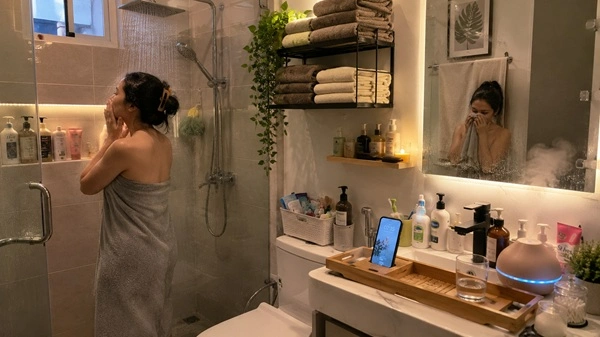
Bathrooms are often ignored in gifting, which is strange because they’re where people start and end their day.
A well-chosen upgrade can completely shift how relaxing that space feels.
Color and materials matter more than people think
Soft, neutral tones tend to work best:
- Warm whites
- Light beige
- Muted greens
- Pale blues
These shades tend to make smaller bathrooms feel less visually heavy.
Natural materials help too:
- Bamboo shelving
- Wooden bath trays
- Stone or pebble-style flooring accents
They add texture without making the space feel busy.
Lighting changes everything
Harsh lighting kills relaxation instantly.
Better options:
- Warm LED bulbs
- Dimmable fixtures
- Candle-style LED lights for safety
- Mirror lighting that softens shadows
Lighting is one of the cheapest upgrades with the biggest emotional impact.
Towels and textiles that feel intentional
This is where comfort becomes physical.
Good choices:
- Thick cotton towels
- Bamboo fiber robes
- Matching sets instead of mixed styles
- Simple storage baskets instead of open piles
It’s less about luxury branding and more about consistency and feel.
Small spa-style upgrades that actually work
A few practical additions:
- Rain shower heads
- Wooden bath trays for books or drinks
- Essential oil diffusers (used carefully, not overpowering)
- Heated towel racks in colder climates
These don’t need a full renovation to make a difference.
A 2023 study from the International Journal of Environmental Research and Public Health highlights how controlled lighting and calming environmental design can improve relaxation and reduce stress responses in home settings.
Smart Home Gifts That Remove Daily Friction

Smart home tech has moved past novelty. In 2026, it’s mostly about convenience and control.
Lighting that adapts to people, not the other way around
Smart lighting systems can:
- Adjust brightness throughout the day
- Turn on automatically when someone enters a room
- Sync with sleep routines
It sounds small, but it changes how a home feels at night. Less harsh switching. More gradual transitions.
Heating and cooling that doesn’t waste energy
Smart thermostats are one of the most practical upgrades.
They can:
- Learn usage patterns
- Adjust temperature when no one is home
- Be controlled remotely
The U.S. Department of Energy reports potential energy savings of around 10% annually with programmable thermostats when used properly.
Security that doesn’t feel complicated
Modern systems include:
- Video doorbells
- Motion alerts sent to phones
- Remote locking systems
- Indoor and outdoor cameras
The key improvement here isn’t just safety. It’s peace of mind when people are away from home.
Smart assistants and hubs
These are often underrated but useful for:
- Setting reminders
- Controlling devices
- Playing music in different rooms
- Managing schedules
They work best when they connect multiple systems into one place.
Furniture and Décor That Changes How a Room Is Used
Furniture gifts can go wrong quickly if they don’t match the space. But when they do fit, they completely change how a room functions.
Examples:
- Modular sofas for small apartments
- Foldable desks for flexible work areas
- Storage benches that double as seating
- Wall-mounted shelves instead of bulky cabinets
The goal is flexibility. Not filling space for the sake of it.
Small décor upgrades also matter:
- Art that reflects personal style, not trends
- Rugs that define space in open layouts
- Lighting that creates zones instead of flat brightness
Outdoor Spaces That Feel Like Extensions of the Home
Outdoor areas often get ignored until someone realizes how much potential they have.
Simple improvements:
- Weather-resistant seating
- String lighting for evenings
- Small herb gardens
- Portable fire pits (where allowed)
Even a small balcony can become a usable space with the right setup.
The trick is not overcrowding it. Just making it usable.
DIY Gifts for People Who Actually Like Building Things
Not everyone wants ready-made solutions. Some people prefer doing it themselves.
Good DIY home improvement gift ideas:
- Furniture assembly kits
- Wall shelving systems
- Indoor gardening kits
- Tool sets for beginners
These work best when the instructions are clear, and the project feels achievable in a weekend, not a month.
There’s also a satisfaction factor here. People tend to value what they build themselves more than what they simply receive.
Sustainable Home Improvement Choices That Actually Matter
Sustainability isn’t just about labels. It shows up in everyday choices.
Better gift directions:
- Reusable storage systems instead of disposable plastics
- Energy-efficient appliances
- Natural fiber textiles
- Water-saving fixtures
The Environmental Protection Agency notes that simple efficiency upgrades in homes can reduce both water and energy usage significantly over time.
The most practical sustainable gifts are the ones that reduce waste without requiring lifestyle changes.
Common Mistakes People Make With Home Improvement Gifts
A few patterns show up again and again:
- Choosing décor that doesn’t match existing space
- Prioritizing aesthetics over usefulness
- Buying oversized items for small homes
- Ignoring storage limitations
- Adding clutter instead of reducing it
The biggest issue is usually assumption. People guess what someone “needs” instead of observing how they actually live.
FAQs About Home Improvement Gifts
What makes a home improvement gift actually useful?
If it gets used weekly without effort, it’s useful. If it needs explaining, it probably won’t last.
Are expensive gifts better?
Not always. A well-designed storage system can outperform an expensive décor piece every day.
What’s safest for someone’s home style?
Neutral, functional items tend to work across most interiors.
Can small gifts still make a difference?
Yes. Lighting changes, organizers, and smart plugs are small but noticeable in daily life.
Conclusion
Home improvement gifts work best when they quietly improve how someone lives, not just how their space looks. A better kitchen layout, a calmer bathroom setup, or a small smart upgrade often matters more than decorative items that sit unused.
The strongest gifts in this category don’t demand attention. They reduce friction. They simplify routines. And over time, they become part of how a home naturally functions without anyone really thinking about it.
Conclusion takeaway:
If a gift makes everyday life slightly easier or calmer, it’s already doing more than most decorative choices ever will.
Sources
- U.S. Department of Energy – Programmable Thermostats
https://www.energy.gov/energysaver/programmable-thermostats - U.S. Environmental Protection Agency – Green Home Guidance
https://www.epa.gov/greenhomes - International Journal of Environmental Research and Public Health – Environmental design and well-being
https://www.mdpi.com/journal/ijerph